Background Part 1: Pipetting
Lecture Video
Selecting a Pipettor
- There are multiple sizes of pipettors. In this lab, you will use 1-10 μl, 10-100 μl, and 100-1000 μl models.
- Each pipettor is most accurate in the high end of its range and less accurate in the low end of its range.
- The range is printed on our pipettors. If it is not, the minimum accurate volume is about 10% of the maximum volume. For example, use a pipettor with a maximum volume of 1000 μl to dispense volumes of 100-1000 μl.
Using a Pipettor
Once you have selected the appropriate pipettor, pull-out the knob to unlock for adjustment, and dial in your target volume. Be careful, dialing a pipettor past its minimum or maximum setting will irreversibly damage the unit!
A micropipettor plunger has three positions: (1) a relaxed ready position, (2) a stop position that varies based on where you set the knob, and (3) a fully depressed stop position. The motion between the ready position is called the primary stroke. The volume specified by the knob is filled and dispensed in the primary stroke. The motion between the first and second stops is called the blow-out. As the name implies, this motion is used to blow-out any extra solution left in the tip.
Below, I describe the two steps in the three techniques for delivering a volume with a pipettor.
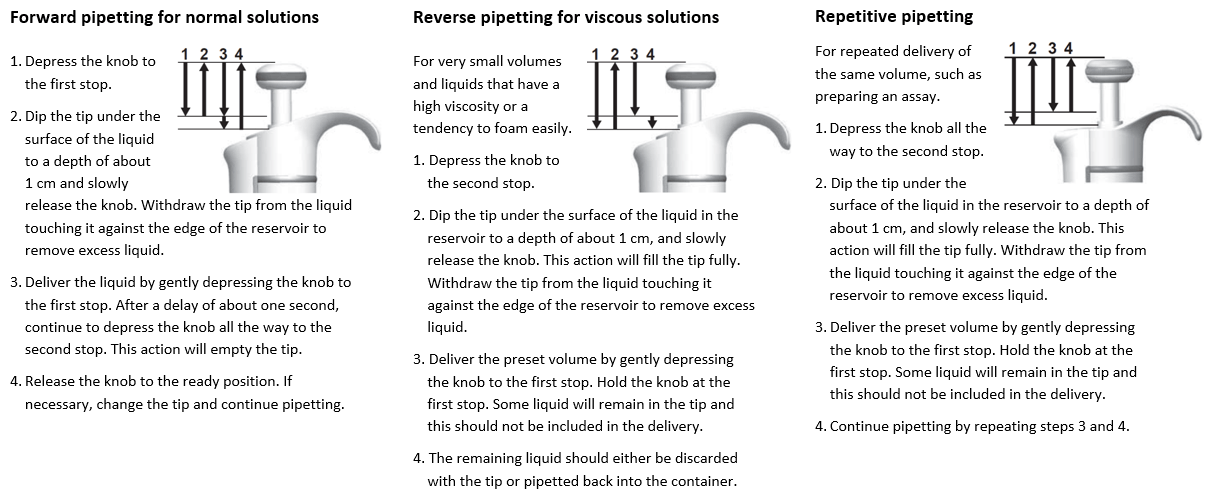
Here is a video for further instruction on forward and reverse pipetting. Additional details on proper pipetting technique can be found here.
Much of this may be obvious to some of you, but it is common for students to waste a lot of time repeating experiments that fail because they did not know how to properly use a pipettor.