MODULE 11: Paleoecology
Objectives: In this module you will learn about paleoecology, which is the study of the ecology of the ancient earth, including its biological and physical characteristics. Paleoecological studies are undertaken to determine the character of past depositional environments, climates, geography and of course... biotas. As such, a paleoecologist brings together data from many sources to form a composite picture of the past.
Background: Paleoecological studies get their information from paleontologists who collect fossils representing the ancient animal communities, paleobotanists who determine what flora existed, geologists who establish the age and character of the depositional environments for the fossils, paleogeographers who determine the positions of the earth's continents in the past, and paleoclimatologists who examine chemical signals that correspond to the prevailing climates.
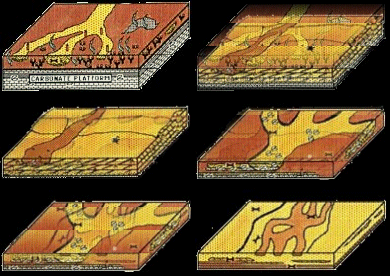
EXAMPLE: The animation above depicts a paleoecological reconstruction for a part of the Indian subcontinent that changed from a marine environment to a terrestrial environment over 25 million years ago as the Himalayan Mountains began to dramatically rise.
ARCHAEOLOGICAL EXAMPLE: Take a look at the Aucilla River Prehistory Project being undertake in Florida. It provides a good example of how floral and faunal information is compiled to present a good picture of a past interval in earth's history.