
|
|
|
Problems
and Issues in Contemporary Ethics
Spring quarter,
2002

Syllabus
Faculty: David Simpson received his PhD in English and Comparative Literature at Columbia University and has served on the faculty in English and humanities at Columbia and Northwestern. His academic interests include classical and Renaissance literature, media studies, American culture, professional communication, and intellectual history. A former member of the Chicago Board Options Exchange, he has served as a consultant in business writing and technical stock-market analysis and has written articles and reviews on topics ranging from jazz and cinema to slang and cyberculture. He has served on the visiting faculty at SNL since 1990.
Email: dsimpson@condor.depaul.edu
Phone: (708) 798-7570
Voicemail: (312) 362-5945
Fax: (708) 798-7570
Course Website: http://www.depaul.edu/~dsimpson/ethics/welcome.html
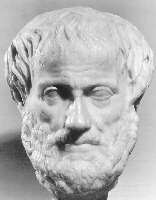
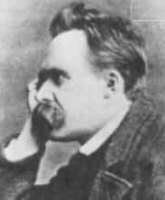
Course description: An introduction to moral philosophy with particular emphasis on the conflict between ethical relativism and "subjectivism" on the one hand and moral realism and "objective" ethics on the other. During the course students will be introduced to classic theories and leading figures in the history of ethics, from Plato and Aristotle to Sade and Nietzsche. Class discussions will focus on issues (e.g., poverty, drug use, capital punishment, sex, euthanasia, abortion, animal rights, criminal violence) at the center of contemporary ethical debate in the United States and throughout the world.
Special Requirements: Access to and familiarity
with the Internet recommended. No special training or advanced computer
skills required.
Competence statements:
| AL-5, A-3-E | Can compare theological or philosophical systems. |
| AL-P, A-3-C | Can examine a social issue from an ethical perspective. |
| AL-G, A-4 | Can analyze a problem using two different ethical systems. |
| WW, F-X | To be written by the student in cooperation with the instructor. |
Criteria for demonstrating competence:
WW, F-X: A 6-8 page essay examining a current issue relating
to workplace policies or business ethics.
AL-5, A-3-E: A take-home exam (part essay, part objective) requiring
students to identify and define a range of important philosophical terms
and to compare and apply the views of two or more philosophers to a current
ethical issue.
AL-P, A-3-C: A 6-8 page essay examining a contemporary social
issue from an ethical perspective.
AL-G, A-4: Option 1: A 6-8 page essay analyzing a current
political issue or social problem from two different ethical viewpoints.
Option
2: A take-home exam.
Assessment: Students are expected to attend
regularly and should be prepared to participate fully in class discussions.
Written projects will be evaluated on the basis of interest and accuracy
of content, depth of understanding, quality of research, force of argument,
and overall organization, readability, and style.
Format: Informal seminar with student-led discussions and occasional brief presentations by the instructor.
Required Text:
Rachels, James. The Elements of Moral Philosophy.
3rd Edition. Hightstown, NJ: McGraw Hill, 1998.
Recommended Texts:
Rachels, James (ed.).
The Right Thing to Do:
Basic Readings in Moral Philosophy. 2nd Edition. Hightstown, NJ: McGraw
Hill, 1999.
Singer, Peter, (ed.). A Companion to Ethics. Oxford, UK: Blackwell Publishers, 1993.
Plato's Protagoras
and Aristotle's Nichomachean
Ethics (both available in electronic format) are also recommended.
Note: All students in the course are expected to uphold the guidelines on academic integrity as set forth in the DePaul Student Handbook.