DePaul University
College of Liberal Arts
Center for Community Research
Community Psychology
| Leonard Jason, Ph.D.
Professor of Psychology
DePaul University
http://condor.depaul.edu/~ljason/ |
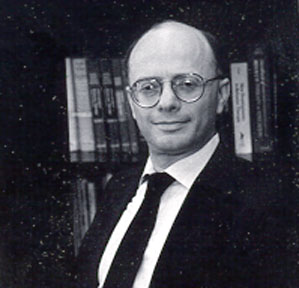
Leonard A. Jason, Ph.D. is a Professor of Psychology at DePaul University,
and Director of the Center for Community Research. He received his Ph.D.
in clinical and community psychology from the University of Rochester.
Jason is a former president of the Division of Community Psychology of
the American Psychological Association (APA) and a past editor of The
Community Psychologist. He received the 1997 Distinguished Contributions
to Theory and Research Award from the Society for Community Research and
Action (Division 27 of the APA). Jason has published more than 350 articles
and chapters on chronic fatigue syndrome (CFS); preventive school-based
interventions; the prevention of alcohol, tobacco, and other drug abuse;
media interventions; and program evaluation. He has served on the editorial
boards of ten psychological journals and has edited or written eleven books.
Jason has served on review committees of the National Institute of Drug
Abuse and the National Institute of Mental Health and has received more
than $10,000,000 in federal research grants. He has received three media
awards from the APA, and is frequently asked to comment on policy issues
for numerous media outlets. In 1995, Jason was awarded a grant from NIH
to study the epidemiology of CFS. Finally, he was presented the 1997 CSN
ACTION Champion Award by the Chronic Fatigue Immune Dysfunction Syndrome
Association of America in appreciation of research and educational efforts
in behalf of persons with CFS. |
Research
Topics by Dr. Leonard A. Jason
Science Politics and the Emergence of a New Disease: The Case of Chronic
Fatigue Syndrome
Chronic Fatigue Syndrome (CFS) emerged as a diagnostic
category during the last decade. Initial research suggested that CFS was
a relatively rare disorder with a high level of psychiatric comorbidity.
Many physicians minimized the seriousness of this disorder and also interpreted
the syndrome as being equivalent to a psychiatric disorder. These attitudes
had negative consequences for the treatment of CFS. Both the CFS case definition
criteria and biases in the scoring and selection of psychiatric tests contributed
to eliciting high rates of psychiatric comorbidity as well as the possibility
of misdiagnosing purely psychiatric cases as CFS cases. In addition, early
CFS epidemiological studies, which were based on physician referrals for
case ascertainment, underestimated the prevalence of this illness. By the
mid 1990's, findings from more representative epidemiologic studies indicated
considerably higher CFS prevalence rates. However, the use of the revised
CFS case definition might have produced heterogeneous patient groups, possibly
including some patients with pure psychiatric disorders. This development
complicated the interpretation of epidemiologic data and treatment outcome
studies, which currently recommend fundamentally distinct and conflicting
rehabilitation programs. Social scientists have the expertise to more precisely
define this syndrome and to develop appropriate and sensitive research
strategies for understanding this disease.
* Friedberg, F., & Jason, L.A. (1998). Understanding
chronic fatigue syndrome: An empirical guide to assessment and treatment.
Washington, D.C.: American Psychological Association. [Chapts. 1-4]
Chronic
Fatigue Syndrome Definition
Chronic
Fatigue Syndrome Etiology
Chronic
Fatigue Syndrome Prevalence
Chronic
Fatigue Syndrome Data
Chronic
Fatigue Syndrome Treatment
Chronic
Fatigue Syndrome Attribution
A Sensible Approach to Kids, TV, and the New Electronic Media
Kids deserve and need more than endless hours of
staring at a flat screen to fully experience the joys and growth essential
to childhood. This talk will review Jason’s 19 years of research on the
use of behavior modification techniques for children who view television
excessively. Working with families in which children literally had run
of the household television set, viewing between 4 to 8 hours of television
daily, Jason devised a system of rewarding kids for positive, non-television
related activities like playing with friends or reading a book. He discovered
that even for the most die-hard young viewers, these replacement activities
eventually became rewarding in themselves, and the need for constant television
gradually faded. With guidance and support from parents, children who watch
an excessive amount of TV can learn to reduce TV viewing.
This talk will aid families seeking to balance television and other
electronic media activities with more positive, active uses of time. This
is not always an easy gamble. The first half of talk gives an overview
of television in the lives of children including television’s content (from
violence, sex, and stereotyping to Big Bird’s educational agenda); the
manner in which children process television and the extent to which they
comprehend all that they see; and the social, emotional, physical, and
academic consequences of heavy viewing. The second half will be more active
in nature, giving families a chance to assess their television habits and
to choose a path of action ranging from simple rules to advanced electronic
equipment to curb their kids’ habits.
http://condor.depaul.edu/~ljason/TVPresen/
* Jason, L.A., & Hanaway, E.K. (1997). Remote control: A sensible
approach to kids, TV, and the new electronic media. Sarasota, Fl.:
Professional Resource Press. [Chapts. 1, 5 & 6] In this presentation,
we will look at why kids watch TV and use other electronic media, and what
parents can do when their children spend too much time on these types of
activities.
Social Action: A Fundamental Value for Community Psychologists
Social action: a fundamental value for community
psychologists. Studies indicate community psychologists can actually be
involved in bringing about higher-order changes involving regulatory and
legislative processes. The studies suggest there are numerous other collaborative
roles that we can assume when attempting to bring about change. Studies
conducted on attempting to reduce youth access to tobacco will be discussed.
Large Scale Media Based Health Promotion Interventions
Media-based health promotion interventions can reach
large segments of the population and lower barriers to participation in
programs. By collaborating with media specialists, we can develop interventions
that might be broader, more publicized, and ultimately more likely to change
behaviors and attitudes within the community. This talk describes a series
of media interventions involving smoking cessation, drug abuse prevention,
stress reduction, weight control, and HIV/AIDS prevention. The process
by which Dr. Jason became involved in these interventions is discussed,
and the implications of developing these types of large scale behavioral
interventions will be discussed.
*Jason, L.A. (1997). Community building: Values for a sustainable
future. Westport, CT: Praeger. [Chapt. 6]
Community Building
Dr. Jason will describe a series of vulnerabilities
(e.g., including a fading of religion as a moral guide, and the wish to
manipulate the external world for one’s own personal ends) that help account
for many of the serious problems facing contemporary society in industrialized
countries, including high rates of crime, homelessness, and alcohol, tobacco,
and other drug addiction. The result has been a loss of hope, an absence
of community, and the loss of tradition and shared meaning. Several wisdom
traditions will be presented as illustrations of alternative conceptualizations
for defining mental health, along with discussion of the implications of
borrowing from these models to set new directions for the helping fields.
*Jason, L.A. (1997). Community building: Values for a sustainable
future. Westport, CT: Praeger. [Chapts. 1-3 & 5]